


Old Boards, New Life: The Period Floors, Restored
Lift a worn carpet in a Victorian terrace in Herne Hill or a Georgian conversion in Kennington and you have a good chance of discovering original floorboards beneath, dusty, scuffed, perhaps at one time patched very badly, but essentially still intact. These are more than a century old floors. They have endured two World Wars, decades of wall-to-wall carpet, and as many DIY crimes as anyone cares to tally. They will last longer than most of the things added nowadays with the proper restoration job. The experts of Wood Floor Fitters London that are familiar with the period properties are better aware of this than anyone, and restoration work that is effectively executed is one of the most satisfying jobs within the trade. Transform your floors today with the help of lvt floor fitters near me and enjoy quality results that last.
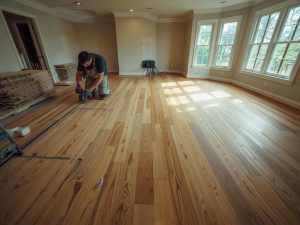
Best Flooring Fitters London has been operating the period properties in South London more than 20 years. Camberwell, Brixton, Streatham, Oval, Clapham North – all these neighbourhoods are reeking with Victorian and Edwardian houses where the old timber remains, waiting in place. This is what proper restoration really entails, and why the details are much more important than most think.
First: Is the Floor Worth Restoring?
It is the question that the majority of homeowners do not even consider asking, and it is the correct place to begin with. Not all original floor is a gem. Others have been so severely repaired, so overrun with the residue of adhesives used in former floor coverings, or so infested with movement and rot that restoration has become a money pit instead of a good investment.
The first thing is to examine board thickness. Original Victorian pine boards are typically 2832mm thick. Sanding erodes material – about 12mm/complete sand cycle. When the floor has actually been sanded two or three times in its life, the boards might be so thin that they cannot be sanded again, without danger of making the floor so pliable that it bends in alarming ways when you step on it.
Next is the structural question. Bouncing, flexing boards, or a high degree of movement at joints must be addressed on joist level prior to any surface work. Add sand to a bouncy floor and you will have a bouncy, freshly sanded floor. The cosmetic result masks nothing about the underlying problem.
We have visited floors in Peckham and Elephant and Castle, which seemed hopeless when viewed above, but which, after a few boards were removed, and the joists examined, were found quite salvageable. Strauss forward assessment saves time, money and disappointment. We have visited floors in Streatham, which, though promising, had been so heavily repaired with filler and by means of haphazard timbers, which had been tacked on over the years, that to restore them would have been more expensive than new engineered boards.
Gap Filling: The Process that makes the difference between Good and Great
Victorian boards move. They used to and they will. The spaces between them belong to that – a natural reaction to change of humidity with the season. There is a difference between the charming narrow crevices of a well-laid floor, and the chilly, draughty holes that open up in floors that have been ignored or central heating installed without proper management of moisture.
Short-term solution is flexible wood filler that is squeezed into the gaps. It appears good in six months and breaks and disintegrates as the boards shift once again in the subsequent seasonal pattern. The outcome is a poorer-looking floor in less than a year.
Slithers, which are thin strips of timber of the same kind cut and glued in place on each gap, are the correct way to treat large gaps. It’s slow work. It takes time and a fair degree of eye in matching grain and colour. However, when properly done, the outcome is a floor which moves like a unit and not one which fights itself. The gaps remain sealed as the repair follows the boards and not the opposite.
In houses in Herne Hill and Brixton, where there are wide gaps and draughts, we occasionally suggest the use of a mixture of slithers on the larger openings, and of a resin filler, mixed with sawdust of the same sanding dust of the floor, on the smaller ones. The colour match with the use of the own material of the floor is literally difficult to beat.
Do you have original boards which require a good evaluation and restoration? Don’t guess–get it right. To get a free consultation, call Best Flooring Fitters London at 020 3322 7001. We serve Herne hill, Brixton, Camberwell, Peckham, Kennington, Oval and all over South London.
Sanding: It is more Art than Science
The process of sanding a Victorian floor is not comparable to sanding a modern engineered product. They are old boards, some softer in spots, they may not run the whole length of their thickness, and the direction of the grain on one board may not be the same as that of another. It is more art than science.
The order is of great importance. Begin too rough, and you are apt to cut ridges into softer parts of pine. Begin too fine and you sand twice as long to half the effect. Sanding across the boards before sanding with the grain is a trick that most professionals do not bother with, but which smooths the floor much better than trying to do it with the grain initially.
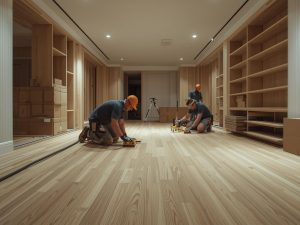
The area where many restoration projects fail to look good is edge sanding. The primary sander cannot go around the edges so an edge sander is employed – and unless the two are blended together you will get a noticeable tide line around the room where the finish does not match the field. An accomplished operator feathers the transition between the two in such a way that the end finish appears to be a single surface.
One of the things that really surprise the homeowners: the dust. Dust will be present even when extraction equipment is in operation. Lots of it. Getting adjoining rooms ready, covering furniture, taking out of the room everything that is of value,–this is no question of optional housekeeping, it is part of the work. Any fitter who fails to mention this is one who has not done it many times to the extent that he recalls.
Completion: Oil, Lacquer, or Hardwax?
The sanding finish used to finish the floor defines the appearance and the future maintenance needs of the floor. Period timber comes in three primary choices: oil, lacquer, and hardwax oil. They are of different nature and different maintenance profiles.
Oil is the most natural looking – the wood looks and feels like wood, the grain is legible, and the colour is near the natural timber colour. Maintenance is the trade-off. Oiled floors require re-oiling, about every two to three years, in a busy home. Spot repairs are simpler, however, a damaged spot in a hall could be oiled again without having to sand the whole floor.
Lacquer forms a more resistant film of surface that is less prone to the effects of marks and spills. It makes a reasonable decision in busy locations – corridors in Kennington terraces, kitchen-diners in Clapham North open-plan conversions. The negative is that once it has been damaged it is more difficult to repair. It is not easy to spot-fix a lacquered floor. After a while the entire thing requires a light sand and repaint.
Hardwax oil is in between the two; it offers better surface protection than a plain oil, but it has more of a natural feel than lacquer, and it is not as difficult to maintain as either at the ends. It is often the most convenient option with period properties where authenticity is important but the floor will be used by real family members. Best Flooring Fitters London suggests it in most of the residential restoration works in the South London.
When Restoration Isn’t the Answer: Contemporary Alternatives
In some cases the original floor is literally beyond rescue – or it would be much more expensive to rescue it than the value it would add after restoration would justify. In such instances, what to place over or rather on it, but nevertheless respecting the nature of a period house is the right question.
Engineered wood, of traditional width, and of traditional species, prime grade oak, natural or slightly stained finish, is very naturally placed in Victorian and Georgian interiors. It lacks the provenance of the original boards, yet it possesses the warm, grain and feel that make period rooms work.
Luxury vinyl tile LVT has also evolved to such an extent that most people who have not checked it recently are surprised. Modern LVT in naturalistic wood colours can really compete in the appropriate setting. It is much more resistant to moisture than any timber product and therefore is especially suited to ground floor rooms in older buildings where damp is still a residual issue.
In Stockwell, Oval, and conversions of basements, period hallways, kitchens, and other spaces, we frequently fit LVT as part of a larger flooring programme – with restored original boards in reception rooms and upper floors, and quality LVT in the more humid spaces. The two can co-exist very well provided that the product and colour is selected wisely.
The Listed Building Question
Listed properties or those in conservation areas need extra attention – and even official permission – before the work on floor restoration can start. English Heritage guidelines tend to favor the preservation and conservation of original materials as opposed to substitution. It may be necessary to approve the stripping of original boards and the replacement with new ones, including sympathetic ones, in listed buildings.
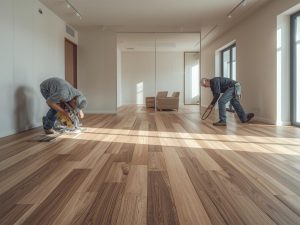
In case your property is listed in Herne Hill, Brixton or Camberwell, it is important to confirm with your local planning authority before you give any order to have any flooring work done. It is not a cause to shun restoration, it is only a cause to order things in order. A professional fitter who has worked in period properties will know this land and will be able to warn about it in case they notice any signs of listing when they first visit.
Best Flooring Fitters London has been employed in listed buildings in South London. The experience is more significant than most individuals know until they have been three weeks into the unauthorised job and have been sent a letter by the council. We know what is right, what needs permission and how to get good outcomes within those limits.
People Also Ask
Which is more cost effective: to restore original floorboards or to install new laminate? It is a factor of the condition of the floor but in most situations the quality laminate installation would cost less in overall total cost than total board restoration, when the aspect of gap filling, sanding and finishing are considered. The cost of restoration may range between 15 and 30 per square metre labour only, not including costs of the materials to fill gaps or to finish products.
Premium laminate, fitted by a professional, begins with much less, and in rooms where the original boards are in poor condition, are heavily patched, or too thin to undergo another sanding cycle, it is often the more reasonable option. Always giving truly honest advice as to which option will be of greater benefit to the homeowner, Best Flooring Fitters London has also installed cheap laminate flooring in Herne Hill, Brixton, Camberwell, Peckham, Kennington, Streatham, Clapham North, Elephant and Castle, Stockwell and Oval.
Ready to refinish your period floors – or whether new flooring is more rational? To book your free survey with Best Flooring Fitters London, call 020 3322 7001 now or visit https://flooringfitterslondon.org.uk/ to book your survey. More than 20 years experience in the best period properties of South London.