


Sustainable Flooring That Actually Looks Good – A Kennington Take
Flooring eco-credentials are a minefield. All brands state that they are sustainable. Each product is certified. A half of them is really good and a half is marketing gloss on recycled paper. The difference is important – especially to the London homeowners who are concerned about the appearance of their floor and how it was manufactured. The Wood Floor Fitters London team of professionals dealing with Best Flooring Fitters London answers such questions on a regular basis and the truth behind the answers is more intriguing than most brands would have people to believe.
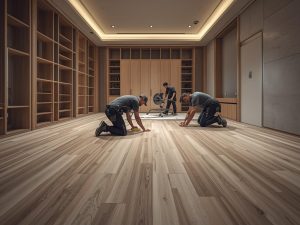
Our experience in laying floors all over South London dates back to more than 20 years. During that period, the sustainability discussion has ceased to be a niche issue and is now a topic that is discussed during most of our consultations, particularly in places such as Kennington where people regard environmental values highly and are posing the right questions. And the following are what these questions ought to be, and what the answers would be in practice.
FSC Certification: What It Means
The gold standard of timber sourcing is the Forest Stewardship Council certification. With an FSC label, it is indicated that the wood in question has been traced back to a forest that has been managed to certain environmental and social requirements – sustainable harvest rates, biodiversity protection, workers and local community fair treatment. It is not perfect, and there is no certification system, which is, but it is the most reasonable verification of the third party in the timber market.
Engineered oak that is FSC-certified is easily available at a competitive price. The certification is an incremental addition to the price, but not a drastic one – it is usually £2-5 per square metre on the cost of the material. In a 20m 2 room, the costs of an additional 40-100 are to be aware that the timber is produced on a well-managed source. Once this is clarified to most clients, they find it worthwhile.
The other recognized scheme is PEFC certification – the Programme of the Endorsement of Forest Certification. It works on the same principles and is especially prevalent with the European timber suppliers. Either scheme is acceptable. What is not good is the supplier who is not capable of delivering any third-party sourcing documentation whatsoever and wants you to trust him/her.
Request the certificate of chain of custody, not a verbal assurance. A good supplier of wood floor fitters in London will have documentation easily accessible. A sourcer who evades questions is a sourcer to be rethought.
Reclaimed Timber: The Most Sustainable of all
Timber is the most environmentally friendly flooring option that can be. Reclaimed wood The wood is reclaimed, reused in demolished structures, disused factories, decommissioned churches, Victorian warehouse floors, and needs no fresh trees, little processing, and embodies a material carbon footprint that is much less than any product made new.
It also appears fantastic. The patina of old pine boards used in a destroyed warehouse in Kennington is something that can never be reproduced by a new product. Old oak of a demolished church, has grain character and surface variation, which manufacturers have invested vast efforts in attempting to emulate. You can not counterfeit 150 years of life. The real thing is recognisably different, and it’s gorgeous.
The feasible considerations are actual, however. Reclaimed timber needs more preparation as compared to fresh product. Boards should be detailed, washed and evaluated in terms of structural integrity. Thickness varies, and this impacts on the way the floor rests and the preparation or underlay requirement below it. It may take time to source a steady amount in a certain size of a larger floor area, reclaimed stock is irregular and limited.
Reclaimed timber is the only choice that homeowners in Kennington who have a period property but want flooring that actually fits the property requires. Best Flooring Fitters London has suppliers of reclaimed timber all over South London and can recommend what is available, what fits best in particular sub floor conditions and what the actual difference in cost would be.
Fancy reclaimed timber, FSC-certified engineered wood or any other sustainable materials in your London home? Best Flooring Fitters London offers a free consultation; call 020 3322 7001. We will take you through what is truly sustainable, greenwash, and what is most effective in your particular property.
Engineered Wood: It is not as bad as it is thought to be
Engineered wood is a controversial item in the debate on sustainability due to its composite nature as a product, which is a real timber wear layer over either a plywood or HDF core. Some dismiss it as not being “real” wood. It is a misconception that should be corrected.
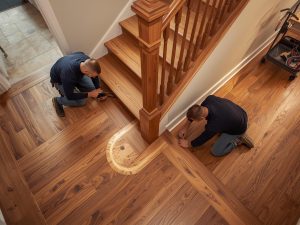
The engineered building is in fact more resource efficient than solid timber in most aspects. The visible surface (wear layer) is only 36mm of high quality hardwood species. The core utilizes more readily available and faster growing timber or wood fibre products. A cubic metre of high quality oak will yield much more engineered flooring compared to solid flooring of the same grade. That is no marketing statement, that is mere material arithmetic.
The engineered wood is the most important sustainability test that is conducted on the adhesive that was employed in the construction of the core and the finish that was used on the surface. Other boards are made of formaldehyde-based adhesives in the core layers – these will off-gas into the home over time and are not only not worth doing on health grounds, but also on environmental grounds. Find boards with E0 or E1 ratings on core adhesive, and water-based or oil finishes instead of solvent-heavy lacquers on surface.
In Streatham and Clapham North properties where families with young children are likely the client, these specifications are important both pragmatically and philosophically. A floor that works and does not stuff the house with VOCs is a better product, notwithstanding the sustainability aspect.
Bamboo: The Ambivalent Eco-Friendly Solution
The marketing of bamboo flooring is not a quiet offer on environmental grounds – and the essence is true. The bamboo is rated among the quickest developing plants in the world as it takes five to seven years to reach harvest maturity as compared to fifty years or more of hardwoods. That is a truly great regenerative benefit.
The manufacturing process and supply chain is the complication. The majority of bamboo flooring is made in China, processed intensively and requires a lot of adhesive, and it takes a long way to get to Kennington. A significant part of the renewable sourcing advantage can be offset by the carbon cost of shipping and manufacturing. The quality also differs enormously – the strand-woven bamboo is truly hard-wearing and some of the lower grades are soft and scratch easily in real life.
Bamboo would be worth considering in terms of whether the product is strand-woven, has an acceptable low-emissions rating on adhesives, and the supplier has the capability to explain the manufacturing process. When bamboo is purchased solely because it is said to be eco-friendly and no additional research is conducted, it is greenwash in a nice box.
Cork: Underestimated, Authentically Environmentally Friendly, Surprisingly Excellent
Cork flooring is not a commonly discussed flooring in most flooring discussions in London, and this is a pity given that the sustainability attributes of cork flooring are actually good. Cork is obtained by cutting the bark of cork oak trees – the tree is never cut, the bark grows again, and one tree can yield a hundred years of cork, harvested after every 9 to 12 years. The harvest in fact enhances the performance of the tree in terms of carbon sequestration.
Contemporary cork flooring is miles apart the orange-brown tiles of the 1970s that most of us remember when we mention the word. Modern products are available in a broad variety of colours and textures, and the treatment of the surface of the products can cope with real-life wear much better than the original untreated products.
Cork is also naturally acoustically and thermally insulated, so it is worth considering in upper-floor flats in Kennington, Elephant and Castle and Stockwell, where noise transfer between floors is often a factor. Being a sustainable flooring solution that really addresses practical issues, it should have a greater amount of attention than it receives.
What About Vinyl? The Sustainability Reality
Vinyl flooring (and LVT, in particular) is not a sustainable product in its usual sense of the term. It is manufactured using PVC, which is a petroleum by-product, and the majority of them cannot be recycled at the end of life. This is worth being explicit on, as some marketing material in this space is creative with the truth.
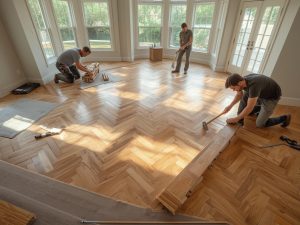
Qualifications are good to have, however. LVT is highly durable, and this implies that it can serve very long before it requires replacing it – minimizing the regularity of the environmental cost in comparison to a cheaper product that fails easily. A few manufacturers have begun to provide take-back programmes and products containing recycled content but these remain a minor proportion of the market.
To homeowners who want to find vinyl floor fitters based purely on their sustainable principles, the frank opinion is to go elsewhere. However, in the case of a ground-floor room in Oval or Stockwell, where a wood product cannot be used due to constant damp problems, quality LVT will be the most reasonable functional option – and a product with a long projected lifespan is the nearest a responsible choice one can have in that category.
People Also Ask
Is laminate flooring an eco-friendly option for Kennington homes?
It is based on the product, however, quality European laminate using certified low-emission adhesives and a recycled-content HDF core is significantly more green than its image. Premium laminate is manufactured with the HDF core usually consisting of pre-consumer recycled wood fibre and no virgin timber is used in the bulk of the board. When procured with manufacturers with worthy environmental certifications and overlaid over a long anticipated lifetime, it outperforms most of the so-called natural flooring products, which have a greater sourcing and manufacturing footprint.
To the homeowners of Kennington who need an affordable floor with a plausible environmental specification, Best Flooring Fitters London can set them straight about the appropriate product – and install it correctly. We have more than 20 years of doing so and we only stock items we would suggest to our own families. You can book your free consultation by calling 020 3322 7001 or going to the site at https://flooringfitterslondon.org.uk/.
Are you willing to decide on a floor that looks better and is more comfortable to your conscience? Best Flooring Fitters London is aware of the products that perform on both.